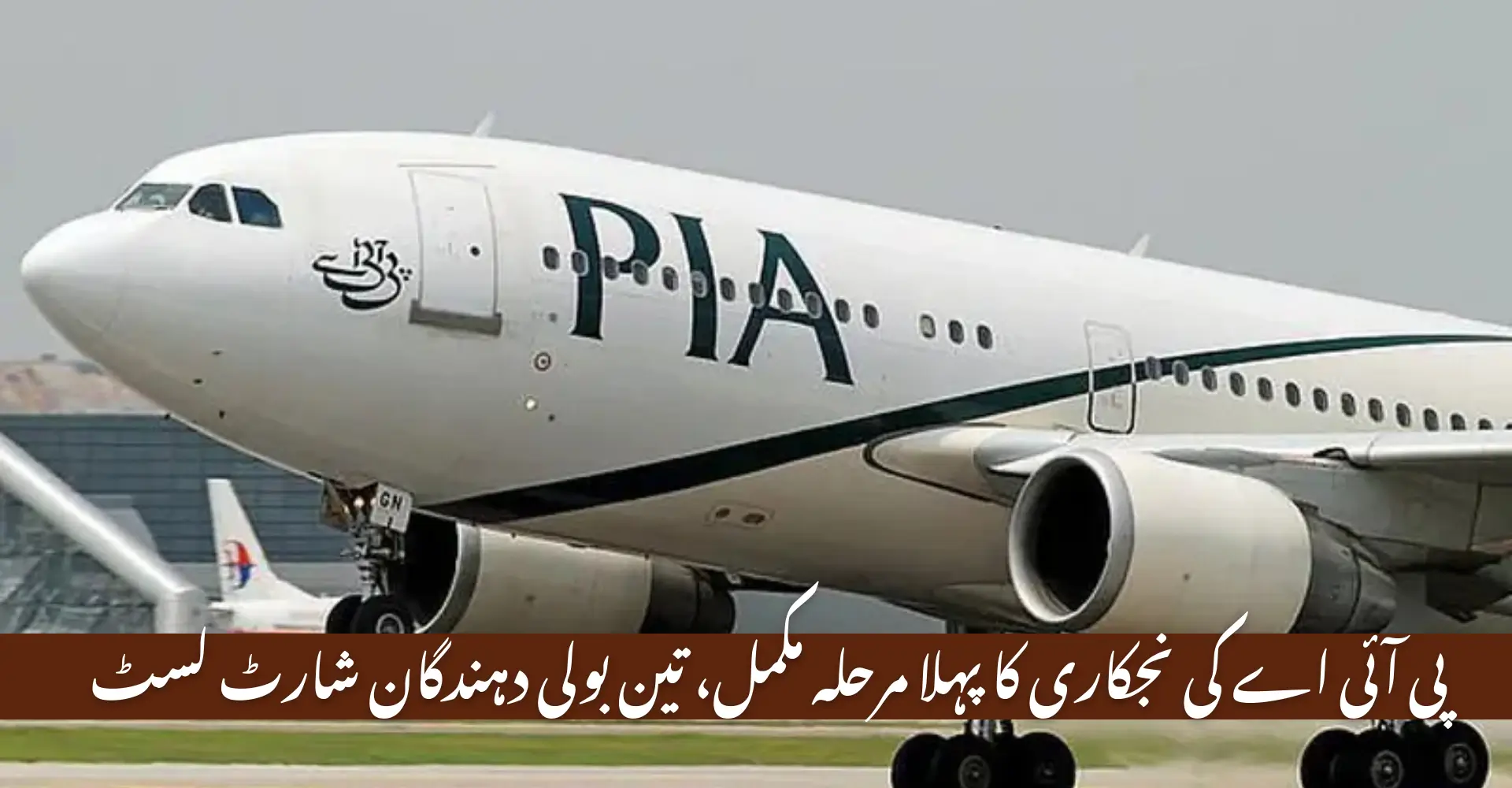
PIA Privatization Update. The first phase of PIA privatization has officially been completed, with three major bidders entering the race to acquire a controlling stake in Pakistan’s national airline. This move signals a major shift in Pakistan’s aviation and economic reform strategy as the government aims to revive PIA through private investment in 2025 and beyond.

PIA Privatization 2025: What Just Happened?
The bidding phase for Pakistan International Airlines (PIA) has formally begun after the successful completion of the pre-qualification process. Three shortlisted bidders have now submitted sealed bids to purchase a 75% controlling stake in the airline.
This milestone represents the completion of Phase One of the PIA privatization process and reflects the government’s renewed commitment to structural economic reforms under Prime Minister Shehbaz Sharif’s reform agenda.
According to officials, the government expects bids exceeding PKR 100 billion, making this one of the largest privatization transactions in Pakistan’s history.
Who Are the 3 Bidders Competing for PIA?
The following pre-qualified bidders have officially entered the race:
1. Lucky Cement–Led Consortium
A powerful business group with diversified interests in cement, energy, and chemicals, Lucky Cement’s entry signals strong investor confidence in PIA’s turnaround potential.
2. Air Blue & Lake City Holdings
Air Blue Private Limited, a well-established private airline, has partnered with Lake City Holdings, combining aviation expertise with strong financial backing.
3. Arif Habib Group–Led Consortium
One of Pakistan’s most respected financial and investment groups, Arif Habib Group brings capital market strength and restructuring experience.
Notable Exit
- Fauji Fertilizer Company (FFC) has officially withdrawn from the bidding process.
PIA Privatization Structure Explained (Simple Breakdown)
| Feature | Details |
|---|---|
| Stake for Sale | 75% controlling stake |
| Government Retention | 25% (option to sell later) |
| Expected Bid Value | PKR 100+ billion |
| Funds Reinvestment | 92.5% into PIA |
| Government Share | 7.5% of proceeds |
This structure shows that the privatization is not a sell-off, but a revival-focused investment model.

Why PIA Privatization Matters in 2025
The privatization of PIA is being described as a turnaround strategy, not merely a transfer of ownership. According to Muhammad Ali, Advisor to the Prime Minister on Privatization, no major privatization of this scale has taken place in the past two decades.
Key objectives include:
- Reducing long-term losses
- Improving service quality
- Expanding international routes
- Attracting sustainable private investment
Transparency in the Bidding Process
To ensure credibility and investor trust, the process has been conducted with strict transparency protocols:
- Sealed bid box displayed before media
- Equal access to the data room for all bidders
- Two-stage process: bid submission followed by formal opening
- Bids scheduled to open at 3:30 PM in Islamabad
Transaction Manager Abdul Basit confirmed that all bids are currently under verification.

PIA Debt Resolution: The Game-Changer
One of the biggest barriers to PIA’s privatization was its massive debt burden.
Government’s Critical Move
The government absorbed:
- PKR 654 billion in liabilities and loans
This decisive step:
- Cleaned PIA’s balance sheet
- Restored investor confidence
- Made privatization commercially viable
Without this move, attracting serious bidders would have been nearly impossible.

Five-Year Business Revival Plan (2025–2030)
A comprehensive five-year business plan has already been finalized to guide PIA’s revival post-privatization.
Key Highlights
Fleet Expansion
- Current aircraft: 18
- Target fleet size: 38 aircraft
- Supported by 18% GST exemption on leased aircraft
Passenger Growth
- Current passengers: ~4 million/year
- Projected growth: 7 million/year
Route Expansion
- Revival of profitable international routes
- Increased regional connectivity
- Improved flight punctuality
Employee Job Security & Workforce Strategy
PIA employees one of the most sensitive stakeholders—have been given job security assurances:
- One-year job protection post-privatization
- Any changes afterward to follow a structured restructuring plan
- Focus on efficiency, training, and skill enhancement rather than mass layoffs
This approach aims to balance operational efficiency with social responsibility.
How This Impacts Pakistan’s Aviation Industry
The privatization of PIA could reshape Pakistan’s aviation landscape by:

- Increasing competition
- Improving service standards
- Lowering operational inefficiencies
- Encouraging private sector-led innovation
If successful, it may also pave the way for future privatizations of state-owned enterprises.
FAQs
Is PIA fully privatized in 2025?
No. The government is selling 75% stake while retaining 25% ownership, with the option to sell later.
Who are the bidders for PIA privatization?
Lucky Cement-led consortium, Air Blue with Lake City Holdings, and Arif Habib Group-led consortium.
How much debt did the government absorb?
The government absorbed PKR 654 billion in liabilities to make PIA attractive for investors.
Will PIA employees lose their jobs?
Employees are guaranteed one-year job security after privatization.
Why is PIA privatization important for Pakistan?
It aims to reduce losses, improve airline performance, and support long-term economic reforms.
Conclusion
The completion of the first phase of PIA privatization marks a historic turning point for Pakistan’s aviation sector. With credible bidders, a clean balance sheet, and a clear revival plan, PIA finally has a realistic chance to regain profitability and global relevance.